Dakshinamurti Stotra
The Silent Teacher: A Complete Guide with Translation and Commentary
Introduction
The Dakshinamurti Stotra, also known as Dakshinamurtyashtakam (the Eight Verses to Dakshinamurti), stands as one of the most profound philosophical compositions in the Advaita Vedanta tradition. Composed by Adi Shankaracharya in the 8th century CE, this stotra presents the ultimate reality through the symbolism of Lord Shiva as Dakshinamurti—the supreme teacher who instructs through silence.
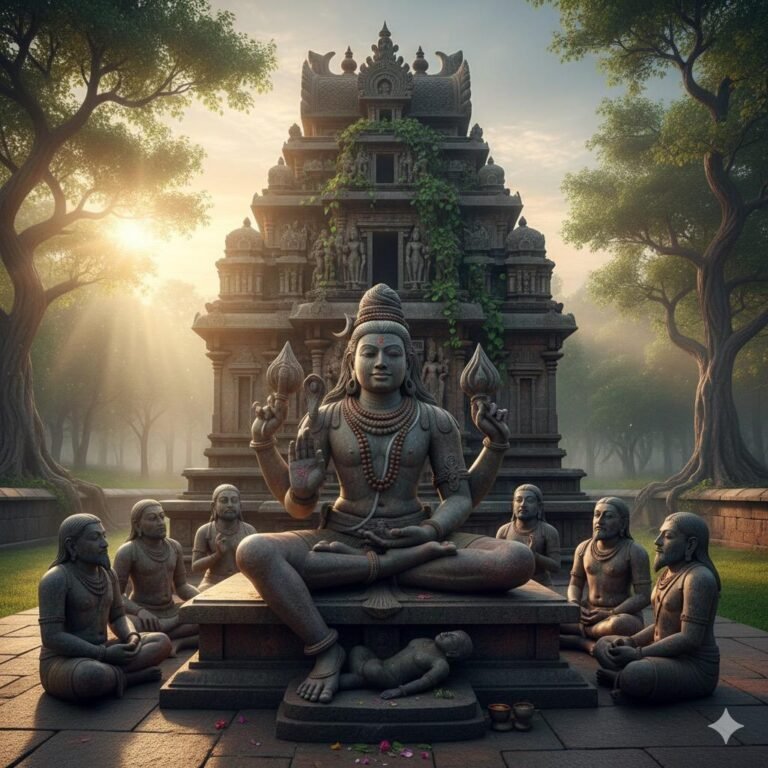
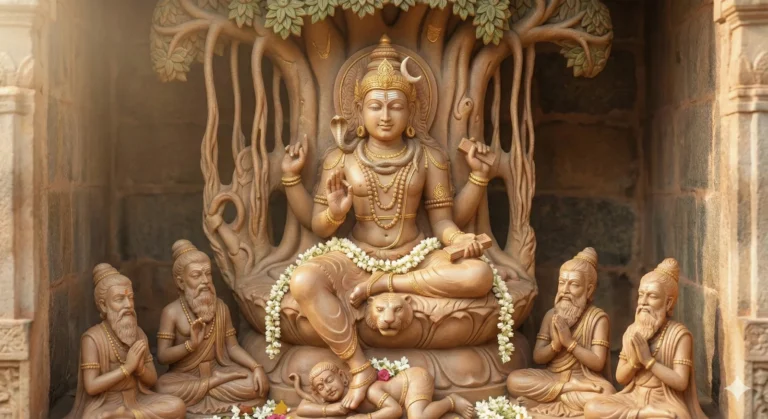
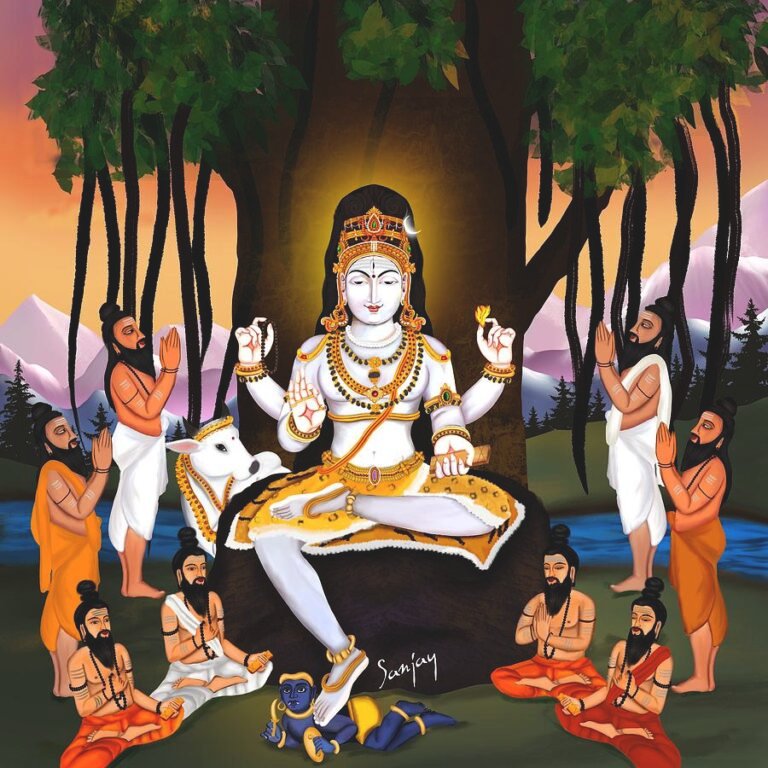
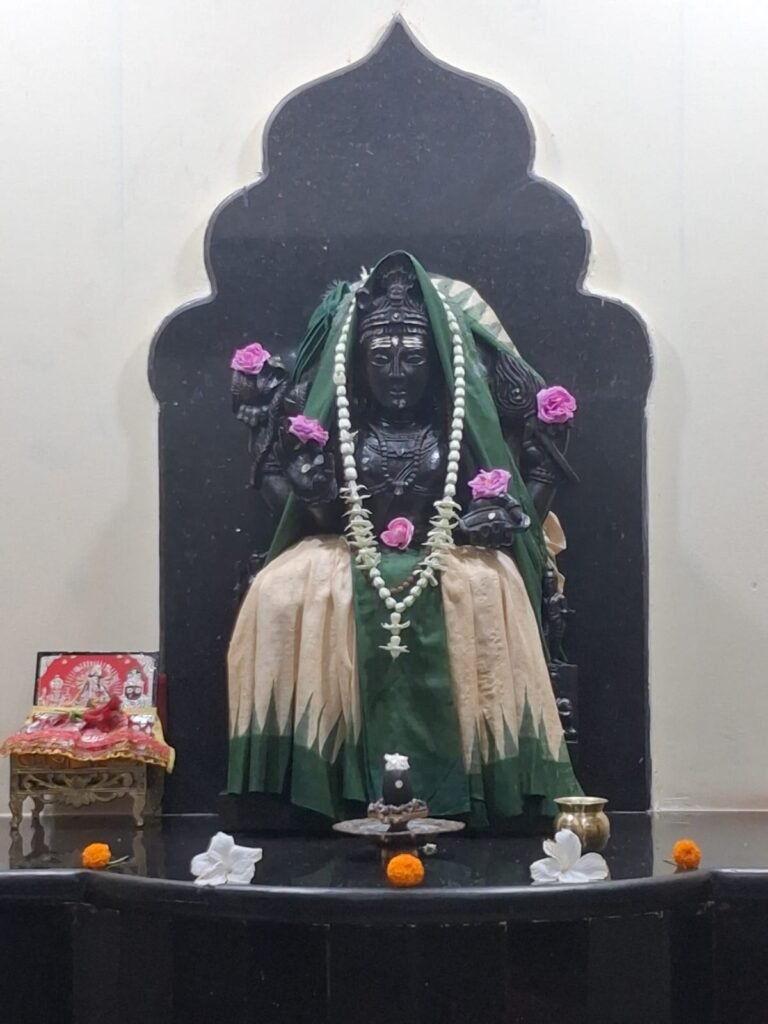
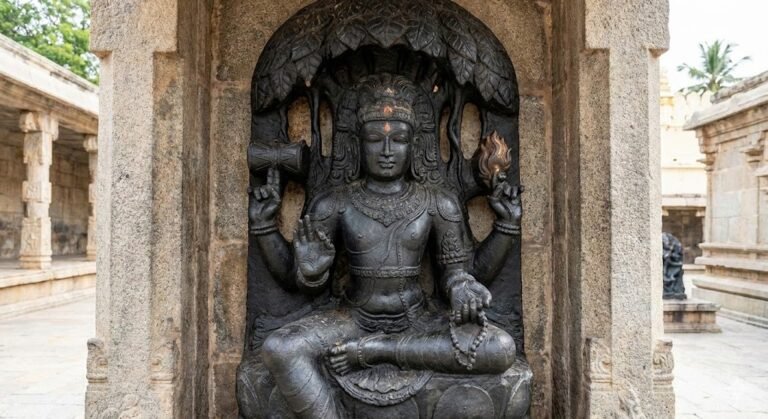
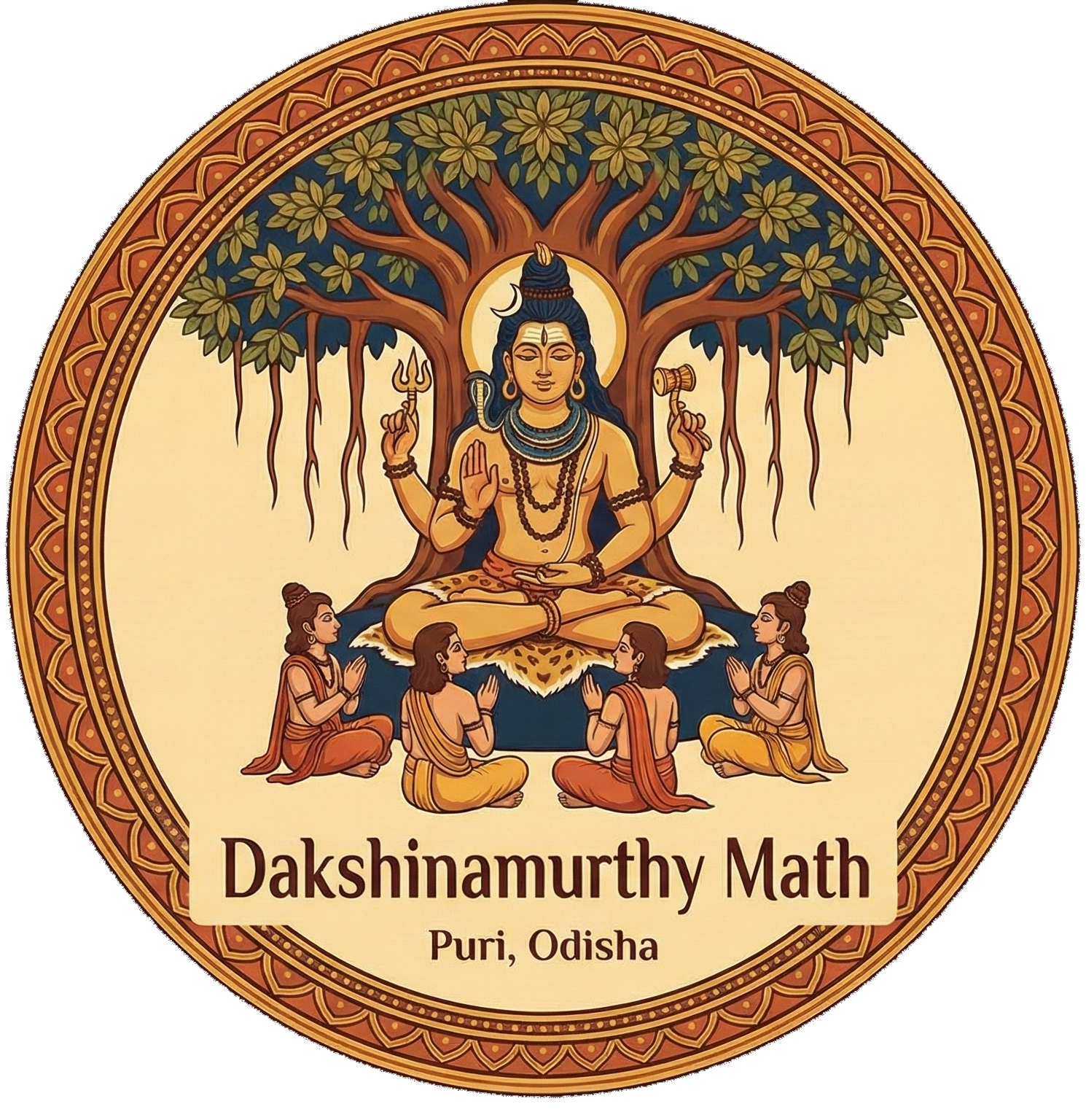
The name “Dakshinamurti” carries deep significance. “Dakshina” means south, and “murti” means form or manifestation. In Hindu iconography, south represents the direction of wisdom and spiritual knowledge. Dakshinamurti is depicted as a youthful sage seated under a banyan tree, facing south, teaching ancient sages through the eloquence of silence—the chin-mudra (gesture of knowledge) being his only instruction.
This work is remarkable for compressing the entire philosophy of non-dualism into eight verses, each exploring different aspects of the ultimate reality and the nature of the Self.
Invocatory Prayer
Sanskrit Text
ॐ यो ब्रह्माणं विदधाति पूर्वम्
यो वै वेदांश्च प्रहिणोति तस्मै ।
तं ह देवमात्मबुद्धिप्रकाशं
मुमुक्षुर्वै शरणमहं प्रपद्ये ॥
Anvaya (Word Order)
यः पूर्वं ब्रह्माणं विदधाति, यः वै तस्मै वेदान् च प्रहिणोति, तं आत्मबुद्धिप्रकाशं देवं मुमुक्षुः वै अहं शरणं प्रपद्ये।
Translation
I, who am desirous of liberation, take refuge in that Supreme Being who first created Brahma (the Creator), who revealed to him the Vedas, and who illumines the intellect within the Self.
Commentary
This invocatory verse from the Shvetashvatara Upanishad1 establishes the supreme importance of the divine teacher. The verse addresses three fundamental aspects of the divine reality. First, it acknowledges that the Supreme Being created even Brahma, the cosmic creator, indicating that this reality transcends all manifestation. Second, it reveals that knowledge itself comes from this source—even the Vedas, considered eternal wisdom, were revealed by this Supreme Being. Third, and most importantly for seekers, this Being illuminates the “atma-buddhi,” the intellect that leads to Self-knowledge.
The word “mumukshu” is significant—it refers to one who has developed the burning desire for liberation, not merely curiosity or intellectual interest. This earnest seeker approaches the Supreme Teacher with complete surrender, indicated by the word “sharanam prapadye” (I take refuge).
Peace Invocation
ॐ शान्तिः शान्तिः शान्तिः ।
The threefold chanting of “shanti” (peace) is traditional in Vedantic texts, invoking peace at three levels: adhidaivika (divine or cosmic disturbances), adhibhautika (environmental or external disturbances), and adhyatmika (internal or psychological disturbances). This creates the proper mental atmosphere for contemplation of the highest truth.
Meditation Verses (Dhyana Shlokas)
First Meditation Verse
Sanskrit Text
मौनव्याख्याप्रकटितपरब्रह्मतत्त्वं युवानं
वर्षिष्ठान्ते वसदृषिगणैरावृतं ब्रह्मनिष्ठैः ।
आचार्येन्द्रं करकलितचिन्मुद्रमानन्दरूपं
स्वात्मारामं मुदितवदनं दक्षिणामूर्तिमीडे ॥ १॥
Anvaya
मौनव्याख्यया परब्रह्मतत्त्वं प्रकटितं युवानं, वर्षिष्ठान् ऋषिगणैः ब्रह्मनिष्ठैः आवृतं, करे चिन्मुद्रां कलितं आनन्दरूपं आचार्येन्द्रं, स्वात्मारामं मुदितवदनं दक्षिणामूर्तिं ईडे।
Translation
I praise Dakshinamurti, who reveals the supreme Brahman through the explanation of silence, who appears youthful, who is surrounded by ancient sages established in Brahman, who is the supreme teacher holding the chin-mudra in his hand, who is of the nature of bliss, who delights in his own Self, and whose face is joyful.
Commentary
This verse presents the iconic image of Dakshinamurti that has inspired countless seekers. The phrase “mauna-vyakhya” (explanation through silence) captures the paradoxical nature of the highest teaching. How can silence explain? Yet this points to a profound truth—the ultimate reality cannot be captured in words, for words create duality between speaker, spoken, and listener. When the teacher is silent and the student is receptive, truth reveals itself directly.
The juxtaposition of the youthful teacher (yuvanam) with ancient sages (varshisthan) creates a striking image. Knowledge has no age—the Self is eternal and ever-fresh, while ignorance can persist through countless lifetimes. The elderly sages, despite their years of practice, sit as humble students before the eternally youthful truth.
The “chin-mudra” mentioned here is the hand gesture where the thumb and index finger touch, forming a circle, while the other three fingers extend outward. This mudra symbolizes the unity of the individual soul (jivatman, represented by the index finger) with the Supreme Self (paramatman, represented by the thumb), while the three extended fingers represent the transcendence of the three gunas (qualities of nature) or the three states of consciousness.2
Second Meditation Verse
Sanskrit Text
वटविटपिसमीपे भूमिभागे निषण्णं
सकलमुनिजनानां ज्ञानदातारमारात् ।
त्रिभुवनगुरुमीशं दक्षिणामूर्तिदेवं
जननमरणदुःखच्छेददक्षं नमामि ॥ २॥
Anvaya
वटविटपिसमीपे भूमिभागे निषण्णं, सकलमुनिजनानां ज्ञानदातारं, त्रिभुवनगुरुं ईशं, जननमरणदुःखच्छेदे दक्षं दक्षिणामूर्तिदेवं नमामि।
Translation
I bow to Lord Dakshinamurti, who is seated on the ground near the banyan tree, who is the bestower of knowledge to all sages immediately, who is the teacher of the three worlds, who is the supreme Lord, and who is skilled in cutting the sorrow of birth and death.
Commentary
The banyan tree (vata-vitapi) holds special significance in Indian spiritual tradition. Its aerial roots descend from branches to earth, creating a complex network that seems to reverse the normal tree structure. This symbolizes how the manifest world appears to emerge from the unmanifest, yet ultimately has its roots in the same ground of being. The banyan also provides expansive shade, representing the protection and refuge offered by the guru’s wisdom.
The word “arat” (immediately) emphasizes that knowledge dawns instantaneously when ignorance is removed. Unlike gradual learning of worldly subjects, Self-knowledge is not acquired piece by piece—when the veil of maya lifts, the ever-present truth is suddenly recognized, just as a darkened room is illuminated the moment a lamp is brought in.
The phrase “janana-marana-duhkha-ccheda-daksham” addresses the fundamental problem that all spiritual seeking aims to solve—the cycle of birth and death (samsara) and its attendant suffering. Dakshinamurti is “skilled” (daksham, which also resonates with the name “Dakshina”) in cutting this knot of ignorance that binds the soul to repeated embodiment.
Third Meditation Verse
Sanskrit Text
चित्रं वटतरोर्मूले वृद्धाः शिष्या गुरुर्युवा ।
गुरोऽस्तु मौनं व्याख्यानं शिष्यास्तु छिन्न संशयाः ॥ ३॥
Anvaya
वटतरोः मूले वृद्धाः शिष्याः, गुरुः युवा—[इदं] चित्रम्। गुरोः व्याख्यानं मौनम् अस्तु, शिष्याः तु छिन्नसंशयाः [सन्ति]।
Translation
How wonderful it is—at the root of the banyan tree, the disciples are old, yet the teacher is young! Though the teacher’s instruction is silence, the disciples’ doubts are completely destroyed.
Commentary
This verse expresses amazement at the paradoxical scene. The word “chitram” (wonderful, strange, marvelous) captures the sense of wonder that should arise when contemplating this teaching. Three paradoxes are presented: ancient seekers learn from a youthful guru, silence serves as instruction, and yet all doubts are completely resolved.
This verse has become emblematic of the Advaita teaching method. It suggests that intellectual explanations, while helpful at preliminary stages, ultimately cannot convey the truth. Words create the illusion of a knower separate from the known, a teacher separate from the teaching. In silence, this duality collapses, and direct realization becomes possible.
The destruction of doubts (chhinna-samshayah) indicates complete clarity. In Advaita philosophy, doubt arises from incorrect knowledge (viparyaya) or partial knowledge. When the teacher’s silence points the disciples’ awareness back to their own essential nature, doubts dissolve because the truth is self-evident—the Self knows itself by being itself.
Fourth and Fifth Meditation Verses
Sanskrit Text
निधये सर्वविद्यानां भिषजे भवरोगिणाम् ।
गुरवे सर्वलोकानां दक्षिणामूर्तये नमः ॥ ४॥
ॐ नमः प्रणवार्थाय शुद्धज्ञानैकमूर्तये ।
निर्मलाय प्रशान्ताय दक्षिणामूर्तये नमः ॥ ५॥
Translation
Salutations to Dakshinamurti, who is the treasure-house of all knowledge, who is the physician for those afflicted with the disease of worldly existence, and who is the teacher of all the worlds.
Salutations to Dakshinamurti, who is the meaning of the sacred syllable Om, who is the sole embodiment of pure knowledge, who is spotless, and who is supremely peaceful.
Commentary
These verses establish Dakshinamurti as the ultimate source of all knowledge and the supreme healer. The metaphor of worldly existence (bhava) as a disease (roga) is central to Hindu and Buddhist spiritual thought. The symptoms of this disease include suffering, delusion, attachment, and fear. The physician (bhishaj) offers not a temporary relief but a complete cure—the realization of one’s true nature.3
The reference to “pranava-arthaya” (the meaning of Om) connects Dakshinamurti to the most fundamental Vedic teaching. The Mandukya Upanishad explains that Om represents the entirety of existence—past, present, and future—and transcends even these. By identifying Dakshinamurti with the meaning of Om, the verse establishes him as the supreme reality itself, not merely a teacher pointing to it.
The term “shuddha-jnana-eka-murtaye” (the sole embodiment of pure knowledge) distinguishes absolute knowledge from relative or partial knowledge. Pure knowledge is consciousness itself, untainted by object-subject duality, unchanging and self-luminous.
The Eight Main Verses
Verse 1: The Mirror of Consciousness
Sanskrit Text
विश्वं दर्पणदृश्यमाननगरीतुल्यं निजान्तर्गतं
पश्यन्नात्मनि मायया बहिरिवोद्भूतं यथा निद्रया ।
यः साक्षात्कुरुते प्रबोधसमये स्वात्मानमेवाद्वयं
तस्मै श्रीगुरुमूर्तये नम इदं श्रीदक्षिणामूर्तये ॥ १॥
Anvaya
यः विश्वं दर्पणदृश्यमाननगरीतुल्यं निजान्तर्गतं [सत्] आत्मनि पश्यन्, मायया निद्रया यथा बहिः इव उद्भूतं [पश्यति], प्रबोधसमये यः स्वात्मानं एव अद्वयं साक्षात्करोते, तस्मै श्रीगुरुमूर्तये श्रीदक्षिणामूर्तये इदं नमः।
Translation
Salutations to Sri Dakshinamurti, the noble teacher-form, who realizes his own Self as non-dual at the time of awakening, who sees within his own Self the entire universe which is comparable to a city seen reflected in a mirror, which is inherent within, yet through the power of maya appears as if manifested externally, just as in dreams.
Commentary and Explanation
This opening verse presents the fundamental teaching of Advaita Vedanta through a brilliant set of metaphors. Let us unpack each layer carefully.
The Mirror Metaphor: When you look into a mirror, you see an entire scene—perhaps a room with furniture, people, and various objects. These images appear to exist in the mirror’s space, yet they have no independent existence there. They are reflections of what exists before the mirror. Similarly, the entire universe (vishvam) exists within consciousness like a reflection in a mirror. The objects seem external and separate, but they exist only as modifications of consciousness itself.
The Dream Analogy: The verse compares this to what happens in sleep. During a dream, you perceive an entire world—places, people, events. While dreaming, these seem completely real and external to you as the dreamer. Yet upon waking, you realize the entire dream world was created within your own mind. There was never any external reality to the dream; it was all a projection of your consciousness. The waking world, Advaita teaches, is similarly a projection within the universal consciousness.
Maya—The Creative Power: The word “maya” here refers to the mysterious power by which the one appears as many, and the internal appears as external. Maya is not exactly illusion in the sense of something that doesn’t exist at all. Rather, it is the power that makes what exists in one form appear in another form. Just as a rope in dim light appears as a snake, the infinite consciousness appears as the finite world through maya’s power.
Awakening to Non-Duality: The verse describes the enlightened one (represented by Dakshinamurti) who “at the time of awakening” (prabodha-samaye) realizes his own Self as non-dual (advaiyam). This awakening is the spiritual awakening, not merely waking from sleep. At this moment of realization, the apparent duality between subject and object, self and world, collapses. The knower realizes that what he took to be an external universe was always his own Self appearing in multiplicity.
Philosophical Significance: This verse addresses one of the central questions in philosophy—how does the multiplicity of the world relate to the unity of ultimate reality? The Advaita answer is that multiplicity is an appearance within unity, never separate from it. The world is neither absolutely real (in the sense of existing independently of consciousness) nor absolutely unreal (in the sense of being completely non-existent like a square circle). It has what Advaita calls “vyavaharika satta”—empirical or practical reality, valid for all practical purposes until the ultimate truth is realized.4
Verse 2: The Seed and the Sprout
Sanskrit Text
बीजस्यान्तरिवाङ्कुरो जगदिदं प्राङ्निर्विकल्पं पुनः
मायाकल्पितदेशकालकलनावैचित्र्यचित्रीकृतम् ।
मायावीव विजृम्भयत्यपि महायोगीव यः स्वेच्छया
तस्मै श्रीगुरुमूर्तये नम इदं श्रीदक्षिणामूर्तये ॥ २॥
Anvaya
बीजस्य अन्तः अङ्कुरः इव, इदं जगत् प्राक् निर्विकल्पं [आसीत्], पुनः मायाकल्पितदेशकालकलनावैचित्र्यैः चित्रीकृतं [अभवत्]। यः स्वेच्छया महायोगी इव मायावी इव अपि [इदं जगत्] विजृम्भयति, तस्मै श्रीगुरुमूर्तये श्रीदक्षिणामूर्तये इदं नमः।
Translation
Salutations to Sri Dakshinamurti, the noble teacher-form, who by his own will manifests this universe like a great yogi or like a magician, which universe was previously in an undifferentiated state like a sprout within a seed, but which has now been made variegated by the distinctions of space, time, and causation imagined by maya.
Commentary and Explanation
This verse explores the emergence of multiplicity from unity through powerful analogies.
The Seed-Sprout Metaphor: Consider a banyan seed, tiny enough to fit on your fingertip. Within that seed exists potentially the entire tree with its massive trunk, spreading branches, countless leaves, flowers, and fruits. Yet in the seed state, these are not differentiated—they exist in potential form, undifferentiated (nirvikalpam). Similarly, before manifestation, the universe exists within Brahman in an undifferentiated state of pure potentiality. The word “prak” (previously, before) indicates this prior state of unity.
Maya’s Imagination of Space, Time, and Causation: The verse identifies three fundamental categories through which multiplicity appears: space (desha), time (kala), and causation (kalana). These are described as “imagined” (kalpita) by maya. This is a profound philosophical point. We take space, time, and causality to be absolutely real features of an external world. But Advaita suggests these are conceptual frameworks through which consciousness organizes its experience, not ultimate realities. Space allows for the appearance of separation (this is here, that is there). Time allows for the appearance of sequence (this comes before, that comes after). Causation allows for the appearance of relationship (this produces that). Without these frameworks, the universe would be experienced as it truly is—as the undifferentiated unity of Brahman.5
The Magician and the Yogi: The verse compares the manifestation to both a magician (mayavi) and a great yogi (mahayogi). A magician creates illusions that appear real to the audience but which he knows to be tricks. He has complete control over the illusion and is never deceived by it. Similarly, a great yogi, through mastery of consciousness, can manifest various forms and experiences at will while remaining established in the awareness of the ultimate reality. The Supreme Being manifests the universe while never losing awareness of its true nature as undifferentiated consciousness.
Svecchaya—By His Own Will: The word “svecchaya” (by his own will or desire) is significant. The universe is not a mechanical or forced projection but a spontaneous, playful (lila) expression of the infinite freedom of consciousness. This addresses a common question: why would the perfect, complete Brahman create a universe? The answer is not necessity but free creative expression, like an artist who creates not from need but from the joy of creation.
Verse 3: The Mahavakya Teaching
Sanskrit Text
यस्यैव स्फुरणं सदात्मकमसत्कल्पार्थकं भासते
साक्षात्तत्त्वमसीति वेदवचसा यो बोधयत्याश्रितान् ।
यत्साक्षात्करणाद्भवेन्न पुनरावृत्तिर्भवाम्भोनिधौ
तस्मै श्रीगुरुमूर्तये नम इदं श्रीदक्षिणामूर्तये ॥ ३॥
Anvaya
यस्य एव स्फुरणं सदात्मकम्, असत्कल्पार्थकं भासते, यः आश्रितान् वेदवचसा “तत्त्वमसि” इति साक्षात् बोधयति, यत् साक्षात्करणात् भवाम्भोनिधौ पुनः आवृत्तिः न भवेत्, तस्मै श्रीगुरुमूर्तये श्रीदक्षिणामूर्तये इदं नमः।
Translation
Salutations to Sri Dakshinamurti, the noble teacher-form, whose very shining forth appears as existence (sat), the purpose of which is the projection of the unreal (asat), who teaches his disciples directly through the Vedic statement “Tat Tvam Asi” (That Thou Art), and by the direct realization of which there is no return to the ocean of worldly existence.
Commentary and Explanation
This verse presents the core teaching methodology of Advaita Vedanta, centered on the mahavakya (great saying) “Tat Tvam Asi.”
Sat and Asat—Real and Unreal: The verse begins with a subtle metaphysical point. The “shining forth” (sphurana) of consciousness is what we experience as existence (sat). Everything we know exists only because consciousness illuminates it. Without consciousness, we could not speak of anything existing. However, this consciousness appears to manifest as objects (asat—the unreal or impermanent), which are called “kalpa-arthakam”—having the purpose or meaning of projection or imagination. The apparent world serves as the content of consciousness, yet it has no independent reality apart from consciousness.
Tat Tvam Asi—The Great Identity: This phrase from the Chandogya Upanishad is one of the four mahavakyas (great statements) that directly point to the identity between the individual self and the Supreme Self.6 “Tat” means “That” (the ultimate reality, Brahman), “Tvam” means “you” (the individual self), and “Asi” means “are.” The sentence declares: You are That. This is not a metaphor or approximation but a statement of absolute identity. The teacher (Dakshinamurti) teaches this directly (sakshat) to disciples who have taken refuge in him (ashritaan).
No Return to Samsara: The verse concludes with the liberation promise—through the direct realization (sakshat-karanat) of this truth, there is no return (na punar avrittih) to the ocean of worldly existence (bhavam-bhonidhau). The word “bhavam-bhonidhau” is particularly evocative—”bhava” means becoming or existence in the world, and “ambo-nidhi” means ocean. Worldly existence is like a vast, turbulent ocean in which beings are tossed about by waves of desire and suffering. Once the truth is directly realized—not merely intellectually understood but experientially known—the person is liberated from this cycle. This is moksha, final liberation.
The Nature of Direct Teaching: The verse emphasizes “sakshat” (directly) in two places. The teacher teaches directly, and this leads to direct realization. Advaita distinguishes between indirect knowledge (paroksha jnana) and direct knowledge (aparoksha jnana). You might know indirectly that fire is hot by reading about it, but you know it directly when you experience the heat. Self-knowledge must be direct—it is the Self knowing itself as itself, with no mediation.
Verse 4: The Lamp in the Pot
Sanskrit Text
नानाच्छिद्रघटोदरस्थितमहादीपप्रभाभास्वरं
ज्ञानं यस्य तु चक्षुरादिकरणद्वारा बहिः स्पन्दते ।
जानामीति तमेव भान्तमनुभात्येतत्समस्तं जगत्
तस्मै श्रीगुरुमूर्तये नम इदं श्रीदक्षिणामूर्तये ॥ ४॥
Anvaya
यस्य ज्ञानं घटोदरस्थितमहादीपप्रभा-भास्वरं नानाच्छिद्रद्वारा बहिः स्पन्दते तु, [यः] तं एव भान्तं अनुभाति [तस्य] “जानामि” इति [भाति], एतत् समस्तं जगत् [तम् एव अनुभाति], तस्मै श्रीगुरुमूर्तये श्रीदक्षिणामूर्तये इदं नमः।
Translation
Salutations to Sri Dakshinamurti, the noble teacher-form, whose knowledge, shining like the light of a great lamp placed inside a pot, goes outward through the doors of various openings (the sense organs like the eyes), and by shining on whom there arises the notion “I know,” and by whose light alone this entire universe shines.
Commentary and Explanation
This verse presents a beautiful metaphor to explain the relationship between consciousness and perception.
The Lamp in a Pot: Imagine a large clay pot with multiple holes in its sides. Place a bright lamp inside this pot. The light from the lamp will stream out through each hole, illuminating whatever lies in that direction. Each beam of light is separate, yet they all come from the same source—the single lamp inside the pot. Similarly, the one consciousness within us (the “great lamp”—mahadeepam) shines outward through the “holes” of our sense organs—eyes, ears, nose, tongue, skin, and mind. Through the eyes, consciousness experiences sights. Through the ears, sounds. Each sense organ is like a hole through which the one consciousness flows outward to illuminate its respective domain.7
The Epistemological Point: The verse makes a subtle but important point about knowledge. When we say “I know,” what is actually happening? We assume that external objects exist independently, that they somehow transmit information to us, and that our mind passively receives this information. But Advaita reverses this understanding. Knowledge doesn’t come from objects to consciousness; rather, consciousness goes out to objects through the senses and illuminates them. An object is “known” only when the light of consciousness falls upon it. Before consciousness illuminates it, we cannot speak of it existing for us at all.
The Foundation of All Experience: The verse concludes with an even more profound point—not only do we know objects by consciousness shining on them, but the entire universe (etat samastam jagat) shines only by the light of that consciousness. This echoes the Upanishadic teaching that consciousness is self-luminous (svayam-prakasha) and illuminates everything else (prakatyatara). The sun, moon, stars, and fire shine, but they shine only because consciousness is present to experience their shining. In deep sleep, when individual consciousness withdraws, the entire universe disappears for that individual, though it continues for others. This indicates that the universe has no absolute, independent existence—it exists always in relation to consciousness.
Practical Implication: This teaching has practical implications for spiritual practice. Since consciousness is the source of all perception and knowledge, turning attention back to its source—rather than constantly flowing outward to objects—becomes the path to Self-realization. This is why meditation practices often begin with withdrawal of the senses (pratyahara) and focus on the witnessing consciousness itself.
Verse 5: The Great Delusion
Sanskrit Text
देहं प्राणमपीन्द्रियाण्यपि चलां बुद्धिं च शून्यं विदुः
स्त्रीबालान्धजडोपमास्त्वहमिति भ्रान्ता भृशं वादिनः ।
मायाशक्तिविलासकल्पितमहा व्यामोहसंहारिणे
तस्मै श्रीगुरुमूर्तये नम इदं श्रीदक्षिणामूर्तये ॥ ५॥
Anvaya
वादिनः देहं प्राणम् अपि इन्द्रियाणि अपि चलां बुद्धिं च शून्यं विदुः, [तथापि] “अहं स्त्रीबालान्धजडोपमः” इति भृशं भ्रान्ताः [सन्ति]। मायाशक्तिविलासकल्पितमहाव्यामोहसंहारिणे तस्मै श्रीगुरुमूर्तये श्रीदक्षिणामूर्तये इदं नमः।
Translation
Salutations to Sri Dakshinamurti, the noble teacher-form, who destroys the great delusion created by the play of maya-shakti—the delusion of those philosophers who, though they know that the body, the vital force, the senses, the changing intellect, and even the void are all unreal, still remain utterly confused, identifying themselves as “I am a woman,” “I am a child,” “I am blind,” or “I am dull.”
Commentary and Explanation
This verse addresses a peculiar paradox in philosophical understanding—the gap between intellectual knowledge and lived experience.
The Philosophical Schools: The verse refers to “vadinah” (those who argue or propound theories)—various philosophers who have sophisticated understandings that the true Self cannot be identified with the physical body, the vital energy, the sense organs, or even the mind. Buddhist philosophers, for instance, demonstrated through elaborate analysis that all phenomena are empty (shunya) of inherent existence. Samkhya philosophers distinguished between Purusha (pure consciousness) and Prakriti (matter-energy including body and mind). These thinkers intellectually understand that the Self transcends all these limited identifications.
The Paradox of Continued Delusion: Yet despite this intellectual understanding, the verse points out that these same philosophers remain “bhrishain bhrantah” (utterly confused). They still identify themselves with limited roles and attributes—gender (stri—woman), age (bala—child), physical limitations (andha—blind), or intellectual capacity (jada—dull). This identification persists despite their philosophical knowledge that these are mere appearances.
The Nature of Maya’s Delusion: This reveals the profound power of maya-shakti (the creative power of illusion). Maya doesn’t simply create false beliefs that can be removed by correct information. Rather, it creates a deep-seated sense of identification that persists even when the intellect knows better. This is why mere intellectual understanding is insufficient for liberation. One might understand theoretically that “I am not the body,” yet still feel hurt when the body is insulted or feel pleasure when it’s complimented.
The Great Delusion (Maha-Vyamoha): The compound “maya-shakti-vilasa-kalpita-maha-vyamoha” describes this as the “great delusion created by the play of maya’s power.” The word “vilasa” (play, sport) suggests that maya’s creative power is not malicious but is rather the spontaneous expression of consciousness, like an actor so absorbed in a role that he temporarily forgets his true identity. The delusion is “maha” (great) because it affects even those with substantial philosophical knowledge.
Dakshinamurti as the Destroyer: The verse salutes Dakshinamurti as the “samharine” (destroyer) of this delusion. How does he destroy it? Not through more intellectual arguments, but through the direct pointing to the Self through silence and grace. When the guru’s teaching penetrates not just the intellect but the deepest core of one’s being, the false identification dissolves, and one remains established in one’s true nature.
Practical Teaching: This verse serves as a warning against spiritual pride in intellectual understanding. Many seekers collect philosophical knowledge but remain bound by subtle ego-identifications. True liberation requires the transformation of one’s entire being, not just the accumulation of correct concepts.
Verse 6: The Witness of Sleep
Sanskrit Text
राहुग्रस्तदिवाकरेन्दुसदृशो मायासमाच्छादनात्
सन्मात्रः करणोपसंहरणतो योऽभूत्सुषुप्तः पुमान् ।
प्रागस्वाप्समिति प्रबोधसमये यः प्रत्यभिज्ञायते
तस्मै श्रीगुरुमूर्तये नम इदं श्रीदक्षिणामूर्तये ॥ ६॥
Anvaya
राहुग्रस्तदिवाकरेन्दुसदृशः मायासमाच्छादनात्, करणोपसंहरणतः यः पुमान् सन्मात्रः सुषुप्तः अभूत्, प्रबोधसमये यः “प्राक् अहम् अस्वाप्सम्” इति प्रत्यभिज्ञायते, तस्मै श्रीगुरुमूर्तये श्रीदक्षिणामूर्तये इदं नमः।
Translation
Salutations to Sri Dakshinamurti, the noble teacher-form, who is recognized at the time of waking with the recollection “I slept peacefully before,” that person who became deep sleep—remaining as pure existence alone due to the withdrawal of the sense organs—like the sun or moon eclipsed by Rahu, obscured by the veil of maya.
Commentary and Explanation
This verse uses the experience of deep sleep as evidence for the eternal, unchanging Self.
The Eclipse Metaphor: When Rahu (the mythical demon who causes eclipses) covers the sun or moon, these luminaries don’t cease to exist—they’re merely obscured from view. When the eclipse passes, we don’t see a different sun or moon but recognize the same luminary that was temporarily hidden. Similarly, in deep sleep (sushupti), the Self doesn’t cease to exist—it’s merely obscured by maya. Upon waking, we recognize the same Self that was present during sleep.8
Pure Existence in Deep Sleep: The verse describes the state of deep sleep as “san-matrah” (pure existence alone). In this state, the sense organs have been withdrawn (karana-upasam-haranatah), the mind has temporarily ceased its modifications, and there’s no perception of objects. Yet existence itself continues. This is a crucial philosophical point—consciousness doesn’t depend on mental activity or sensory perception for its existence. Even when all particular experiences cease, the ground of existence remains.
The Recognition Upon Waking: The phrase “prag asvapsam iti” (“I slept peacefully before”) is significant. Upon waking, everyone naturally says “I slept well” or “I didn’t sleep well.” This statement proves several things: First, there was continuous existence throughout sleep—the “I” that slept is the same “I” that woke. Second, there was awareness in sleep—how else could you know you slept? Third, this awareness transcends the waking mind, since the waking mind wasn’t present during sleep. This is the witness consciousness (sakshi), which remains present through all three states—waking, dreaming, and deep sleep.9
Maya’s Veiling Power: The verse attributes the obscuration to “maya-samacchadanat” (from being covered by maya). Maya has two powers: avarana-shakti (veiling power) and vikshepa-shakti (projecting power). In deep sleep, the projecting power temporarily ceases—there’s no world-appearance. But the veiling power remains, preventing the direct recognition of the Self. In waking and dream states, both powers operate—maya both veils the Self and projects the appearance of multiplicity.
Liberation Knowledge: Understanding this teaching leads to a profound recognition—if the Self exists unchanged through all states, then I am not any particular state. I am not the waking personality, the dreamer, or even the deep sleeper. I am the unchanging consciousness that witnesses all three states. This discrimination between the witness and the witnessed is crucial for liberation.
Verse 7: The Eternal “I”
Sanskrit Text
बाल्यादिष्वपि जाग्रदादिषु तथा सर्वास्ववस्थास्वपि
व्यावृत्तास्वनुवर्तमानमहमित्यन्तः स्फुरन्तं सदा ।
स्वात्मानं प्रकटीकरोति भजतां यो मुद्रया भद्रया
तस्मै श्रीगुरुमूर्तये नम इदं श्रीदक्षिणामूर्तये ॥ ७॥
Anvaya
बाल्यादिषु अपि, जाग्रदादिषु तथा, सर्वासु अवस्थासु अपि व्यावृत्तासु, “अहम्” इति अन्तः सदा स्फुरन्तं अनुवर्तमानं स्वात्मानं, यः भजतां भद्रया मुद्रया प्रकटीकरोति, तस्मै श्रीगुरुमूर्तये श्रीदक्षिणामूर्तये इदं नमः।
Translation
Salutations to Sri Dakshinamurti, the noble teacher-form, who reveals through the auspicious chin-mudra to his devotees their own Self—that Self which continuously shines within as “I,” which persists unchanged through all stages of life from childhood onward, through all states of consciousness such as waking and others, even as these various conditions keep changing.
Commentary and Explanation
This verse points to the most immediate and undeniable experience—the sense of “I”—as the key to Self-realization.
The Unchanging “I”: Consider your life from childhood to now. Your body has completely changed—the cells you had as a child are long gone. Your thoughts, beliefs, emotions, and personality have evolved. Your circumstances have transformed. Yet through all these changes, there’s been one constant—the sense of being “I.” The “I” that exists now is the same “I” that existed when you were five years old. This is not the ego-sense or personal identity, which does change, but the fundamental awareness of existence—the “I am” that precedes all qualifications.10
Through All States: The verse lists two types of changes: stages of life (balya-adishu—childhood and so on) and states of consciousness (jagrat-adishu—waking and so on). Through infancy, childhood, youth, adulthood, and old age; through waking, dreaming, and deep sleep; through happiness and sorrow, health and sickness—the fundamental “I” awareness remains constant. This is remarkable because we tend to identify with changing attributes: “I am young,” “I am happy,” “I am successful.” But these are temporary qualifications of the unchanging “I.”
Always Shining Within (Antah Sphrantam Sada): The phrase “antah sphrantam sada” (always shining within) describes the Self-luminous nature of consciousness. Unlike objects that need external light to be known, consciousness knows itself immediately and directly. You don’t need to prove that you exist—existence is self-evident. This inner shining is constant (sada—always), not intermittent.
The Auspicious Mudra: Dakshinamurti reveals this truth through “bhadra-mudraya” (the auspicious gesture). The chin-mudra, where the thumb and forefinger touch while the other fingers extend, symbolizes the teaching. The thumb represents the Supreme Self, the forefinger the individual self, and their touching shows their essential identity. The three extended fingers represent transcendence of the three gunas, the three bodies, or the three states. This silent gesture communicates what words cannot fully convey—the direct recognition of one’s true nature.
Revelation, Not Creation: The verse uses “prakatayati” (reveals or makes manifest), not “creates” or “gives.” The Self doesn’t need to be created or given—it’s already your essential nature. What’s needed is removal of ignorance that obscures this recognition. The guru doesn’t give you the Self; he removes your misidentification with the non-Self, allowing your true nature to shine forth.
Verse 8: The Delusion of Diversity
Sanskrit Text
विश्वं पश्यति कार्यकारणतया स्वस्वामिसंबन्धतः
शिष्याचार्यतया तथैव पितृपुत्राद्यात्मना भेदतः ।
स्वप्ने जाग्रति वा य एष पुरुषो मायापरिभ्रामितः
तस्मै श्रीगुरुमूर्तये नम इदं श्रीदक्षिणामूर्तये ॥ ८॥
Anvaya
यः एषः पुरुषः विश्वं कार्यकारणतया, स्वस्वामिसंबन्धतः, शिष्याचार्यतया तथा एव, पितृपुत्राद्यात्मना भेदतः स्वप्ने जाग्रति वा पश्यति, [सः] मायापरिभ्रामितः, तस्मै श्रीगुरुमूर्तये श्रीदक्षिणामूर्तये इदं नमः।
Translation
Salutations to Sri Dakshinamurti, the noble teacher-form, who liberates that person who, deluded by maya, perceives the universe in terms of cause and effect, in terms of servant and master relationship, in terms of teacher and student, in terms of father and son and so on—perceiving differences whether in dream or in the waking state.
Commentary and Explanation
This verse examines how the unenlightened mind creates and maintains dualistic distinctions.
The Web of Relationships: The verse lists several types of dualistic perceptions that characterize ordinary consciousness. Let’s examine each:
- Cause and Effect (Karya-Karana): We perceive the world as a chain of causes producing effects. Clay causes pot, seed causes tree, past actions cause present situations. This causal thinking structures our entire understanding of reality. Yet Advaita points out that cause and effect are merely conceptual relationships imposed on the underlying unity. The clay doesn’t really become a different substance when shaped into a pot—it remains clay. All effects are merely name-and-form variations of their material cause.
- Owner and Property (Sva-Svami): We divide the world into possessor and possessed—”This is mine,” “That belongs to you.” This creates endless anxiety, conflict, and suffering as we try to acquire, protect, and control what we consider ours. Yet from the absolute standpoint, who owns what? The same consciousness animates all bodies; the same substance underlies all forms.
- Teacher and Student (Shishya-Acharya): Even in the spiritual realm, we maintain dualistic categories. There’s one who knows and another who doesn’t, one who teaches and another who learns. Yet the ultimate teaching is that teacher and student are one Self appearing as two. The guru is not different from your own Self; he’s your Self in the form of grace, showing you what you already are.
- Father and Son (Pitri-Putra-Adi): Family relationships seem fundamental and real, yet they’re temporary roles assumed in this life. The one who is father in one life may be son in another. These relationships, while important in the relative world, are not ultimately real. They’re roles played by the one consciousness.
In Dream and Waking: The crucial phrase “svapne jagrati va” (whether in dream or waking) suggests that the distinction-making persists in both states. In dreams, we create entire worlds with their own logic, relationships, and dramas. Upon waking, we realize none of it was ultimately real—it was all a projection of our own mind. Yet we fail to apply this insight to the waking state, which is similarly a projection of consciousness. The persistence of dualistic perception in both states shows how deep the delusion runs.
Maya-Paribramitah: The verse describes such a person as “maya-paribramitah” (deluded or caused to wander about by maya). The word “paribramitah” suggests confused wandering, going in circles. This beautifully captures the experience of samsara—going round and round in cycles of birth and death, relationship and separation, gain and loss, never finding lasting peace because one is seeking it in the realm of change and multiplicity.
Liberation from Duality: Dakshinamurti liberates one from this delusion by pointing to the non-dual reality underlying all apparent diversity. When this is recognized, relationships continue to exist in the practical world, but one is no longer bound by them. One can play various roles without being confused about one’s true identity, just as an actor plays various parts without forgetting he’s acting.
Verse 9: The Eight Forms
Sanskrit Text
भूरम्भांस्यनलोऽनिलोऽम्बरमहर्नाथो हिमांशुः पुमान्
इत्याभाति चराचरात्मकमिदं यस्यैव मूर्त्यष्टकम् ।
नान्यत्किञ्चन विद्यते विमृशतां यस्मात्परस्माद्विभोः
तस्मै श्रीगुरुमूर्तये नम इदं श्रीदक्षिणामूर्तये ॥ ९॥
Anvaya
भूः, अम्भांसि, अनलः, अनिलः, अम्बरं, अहर्नाथः, हिमांशुः, पुमान् इति, चराचरात्मकम् इदं यस्य एव मूर्त्यष्टकम् आभाति, विमृशतां यस्मात् परस्मात् विभोः अन्यत् किञ्चन न विद्यते, तस्मै श्रीगुरुमूर्तये श्रीदक्षिणामूर्तये इदं नमः।
Translation
Salutations to Sri Dakshinamurti, the noble teacher-form, whose eight forms alone appear as this universe consisting of the moving and the unmoving—namely earth, water, fire, air, space, sun, moon, and the individual soul—than which supreme, all-pervading Reality, nothing else whatever exists for those who inquire.
Commentary and Explanation
This verse presents the entire manifest universe as the eightfold form of the Supreme Reality.
The Eight Forms (Murtyashtakam): The verse lists eight fundamental elements that constitute the entire universe:
- Bhu (Earth): The solid principle, representing all that is tangible and stable
- Ambhamsi (Water): The liquid principle, representing fluidity and cohesion
- Analah (Fire): The principle of heat, light, and transformation
- Anilah (Air): The gaseous principle, representing movement and life-breath
- Ambaram (Space/Ether): The principle of accommodation, wherein all else exists
- Ahar-nathah (Sun): The day-maker, source of light and life
- Himamshu (Moon): The cool-rayed one, representing the mind principle
- Puman (Individual Soul): The conscious principle, the experiencing entity
These eight encompass everything in the universe—the five elements (pancha-bhutas) plus sun, moon, and individual souls. Together, they constitute “charachara” (the moving and unmoving)—all of manifest existence.11
All as Divine Forms: The verse states that these eight “appear” (abhati) as the forms (murtyashtakam) of the Supreme Reality itself. This is the Vedantic teaching of “sarvam khalvidam brahma” (all this is indeed Brahman). The elements are not separate from or opposed to spiritual reality—they are spiritual reality in manifest form. The earth you walk on, the water you drink, the air you breathe, the sun that warms you—all are forms of the Divine.
Nothing Else Exists: The verse concludes with a strong non-dualistic statement: “na anyat kinchana vidyate” (nothing else whatever exists). For those who inquire deeply (vimrishatam), who contemplate and investigate reality, only the one Supreme Reality (yasmat parasmad vibhoh—than which supreme, all-pervading One) exists. Everything else is name and form, temporary appearance, like waves on the ocean—the waves appear different, but there’s only water.
Practical Implication: This teaching transforms one’s relationship with the world. Instead of seeing the world as separate from and opposed to spiritual reality, one recognizes the world as the Divine play. The dualistic opposition between spirit and matter dissolves. This doesn’t mean one stops discriminating in practical life, but one no longer sees the world as fundamentally different from oneself.
Verse 10: The Fruit of Study
Sanskrit Text
सर्वात्मत्वमिति स्फुटीकृतमिदं यस्मादमुष्मिन् स्तवे
तेनास्य श्रवणात्तदर्थमननाद्ध्यानाच्च सङ्कीर्तनात् ।
सर्वात्मत्वमहाविभूतिसहितं स्यादीश्वरत्वं स्वतः
सिद्ध्येत्तत्पुनरष्टधा परिणतं चैश्वर्यमव्याहतम् ॥ १०॥
Anvaya
यस्मात् अमुष्मिन् स्तवे सर्वात्मत्वम् इति इदं स्फुटीकृतम्, तेन अस्य श्रवणात्, तदर्थमननात्, ध्यानात् च, सङ्कीर्तनात् [च], सर्वात्मत्वमहाविभूतिसहितं ईश्वरत्वं स्वतः स्यात्, तत् पुनः अष्टधा परिणतं अव्याहतं चैश्वर्यं सिद्ध्येत्।
Translation
Because in this hymn the truth of being the Self of all has been clearly revealed, therefore by listening to it, by reflecting on its meaning, by meditating on it, and by singing it, may there spontaneously arise the state of being the Lord, accompanied by the great power of being the Self of all. Then may the unobstructed eightfold wealth, manifested in eight ways, be accomplished.
Commentary and Explanation
This concluding verse describes the fruits of studying and practicing this stotra.
The Central Teaching: The verse begins by stating that this hymn has clearly revealed (sphutikritam—made manifest, clarified) the truth of “sarvatmatvam” (being the Self of all). This is the ultimate realization—not that I am a small, separate individual, but that I am the one Self appearing as all beings. This is not a metaphorical or devotional sentiment but the literal truth according to Advaita.
The Four-fold Practice: The verse prescribes four modes of engagement with this teaching:
- Shravanam (Listening): Hearing the teaching repeatedly from qualified teachers or sacred texts. This creates the initial understanding and plants the seed of knowledge.
- Mananam (Reflection): Deeply contemplating the teaching, removing doubts, reconciling apparent contradictions, and making the teaching intellectually clear. This strengthens and clarifies what was heard.
- Dhyanam (Meditation): Sustained contemplation, making the teaching experiential rather than merely intellectual. This transforms understanding into realization.
- Sankirtanam (Singing/Recitation): Devotional recitation or chanting, which purifies the mind and creates conducive conditions for knowledge to dawn.
Isharatvam (Lordship): The verse promises that through these practices, “isharatvam” (the state of being the Lord) arises spontaneously (svatah—by itself). This doesn’t mean becoming a different entity called “God,” but recognizing one’s true nature as the infinite consciousness that is the Lord of all. When one realizes “I am the Self of all,” fear disappears, for whom would one fear when there’s no other? Desire ends, for what would one desire when one is complete?
The Eight-fold Wealth (Ashtadha Chaishvaryam): The verse mentions “ashtadha parinatam chaishvaryam avyahatam” (eightfold unobstructed wealth). In yogic and Vedantic literature, the eight great powers (ashtaisvaryas) include:
- Anima: The ability to become as small as desired
- Mahima: The ability to become as large as desired
- Laghima: The ability to become as light as desired
- Garima: The ability to become as heavy as desired
- Prapti: The ability to obtain anything desired
- Prakamya: The ability to fulfill any desire
- Ishitva: Lordship over all
- Vashitva: Control over all
However, these shouldn’t be understood merely as supernatural powers. More profoundly, they represent the natural state of one who has realized the Self—complete freedom, unlimited being, and the power of infinite consciousness. When limitations of false identification dissolve, one’s natural infinite nature manifests.
Avyahatam (Unobstructed): The powers are described as “unobstructed” because nothing can obstruct what is infinite. The realized being experiences no resistance from the universe because there’s no separation between the Self and the universe.
Concluding Meditation Verse
वटविटपिसमीपे भूमिभागे निषण्णं
सकलमुनिजनानां ज्ञानदातारमारात् ।
त्रिभुवनगुरुमीशं दक्षिणामूर्तिदेवं
जननमरणदुःखच्छेददक्षं नमामि ॥
This verse, repeated from the opening meditation verses, brings us full circle. Having traversed the profound teachings of the eight verses, we return to bow before the image of the silent teacher under the banyan tree—the eternal guru who reveals the highest truth not through elaborate discourse but through the pregnant silence of perfect knowledge.
Colophon
इति श्रीमत्परमहंसपरिव्राजकाचार्यस्य श्रीगोविन्दभगवत्पूज्यपादशिष्यस्य
श्रीमच्छङ्करभगवतः कृतौ दक्षिणामूर्त्यष्टकं सम्पूर्णम् ।
Thus ends the Dakshinamurtyashtakam, composed by the venerable Shankaracharya, the disciple of the revered Govinda Bhagavatpada, who was a wandering monk of the highest order (paramahamsa parivrajaka).
Conclusion: The Living Tradition
The Dakshinamurti Stotra is not merely a historical text but a living transmission. For over twelve centuries, seekers have turned to these verses for guidance on the path to Self-realization. Each verse can become a meditation in itself, a doorway to direct insight.
The genius of Shankaracharya’s composition lies in its multi-layered accessibility. On one level, it presents sophisticated Vedantic philosophy. On another, it offers devotional imagery for worship. At the deepest level, it functions as a direct pointing to one’s own true nature.
The image of Dakshinamurti—the youthful sage teaching through silence—reminds us that the highest truth cannot be captured in words. Words can point, suggest, evoke, but the realization itself must dawn in the silence beyond thought. When the mind becomes still, when the questions cease, when the seeker dissolves into the seeking—there, the silent teacher speaks his eternal wisdom.
May this stotra guide all sincere seekers to the recognition of their true nature as the infinite, eternal, blissful consciousness that they have always been.
ॐ शान्तिः शान्तिः शान्तिः
Footnotes and References
Appendix: Practical Guidance for Study
For Daily Recitation:
- Begin with the invocatory prayer to create the proper mental attitude
- Recite the meditation verses to visualize the form of Dakshinamurti
- Chant the eight main verses slowly, pausing after each to contemplate its meaning
- Conclude with the fruit verse and final salutation
- Practice in the early morning when the mind is fresh and calm
For Deep Study:
- Take one verse each week for intensive contemplation
- Journal your reflections and insights
- Discuss with fellow seekers or teachers
- Apply the teaching to your direct experience
- Notice how the teachings illuminate your daily life
For Meditation:
- Choose one verse that particularly resonates
- Sit in meditation posture, establish regular breathing
- Mentally recite the verse several times
- Let the meaning settle into silence
- Rest in the awareness the verse evokes
- Return to the verse if the mind wanders
The study of this stotra is itself a spiritual practice (sadhana) that can lead to liberation when
Footnotes
- Shvetashvatara Upanishad 6.18. This Upanishad belongs to the Krishna Yajur Veda and is one of the principal Upanishads. It uniquely combines dualistic devotion with non-dualistic philosophy. ↩
- The chin-mudra is extensively discussed in yogic texts such as the Gheranda Samhita and Hatha Yoga Pradipika. In Advaita Vedanta, it specifically symbolizes the mahavakya “Tat Tvam Asi” (That Thou Art). ↩
- The metaphor of samsara as a disease and the guru as physician is found throughout Buddhist and Hindu literature. The Buddha called his teaching the “medicine” for the disease of suffering, and Shankaracharya repeatedly uses medical metaphors in his commentaries. ↩
- The three levels of reality in Advaita are: paramarthika (absolute reality—Brahman alone), vyavaharika (empirical reality—the world of practical experience), and pratibhasika (illusory reality—dream, illusion, error). See Shankaracharya’s commentaries on Brahma Sutra 2.1.14 and Mandukya Upanishad. ↩
- Kant’s philosophy of transcendental idealism independently arrived at similar conclusions about space, time, and causality being forms of human understanding rather than features of things-in-themselves, showing this insight’s philosophical depth. ↩
- The four mahavakyas (great statements) are: “Prajnanam Brahma” (Consciousness is Brahman—Aitareya Upanishad), “Tat Tvam Asi” (That Thou Art—Chandogya Upanishad), “Ayam Atma Brahma” (This Self is Brahman—Mandukya Upanishad), and “Aham Brahmasmi” (I am Brahman—Brihadaranyaka Upanishad). ↩
- This teaching closely parallels the Kena Upanishad’s famous passage: “That which is not expressed by speech, but by which speech is expressed—know That alone to be Brahman.” (Kena Upanishad 1.5) ↩
- The analysis of the three states of consciousness—waking, dream, and deep sleep—is central to Vedantic methodology. The Mandukya Upanishad is entirely devoted to this analysis, showing how the turiya (fourth state—pure consciousness) underlies and transcends the three changing states. ↩
- The witness consciousness (sakshi) is discussed extensively in Advaita texts. Shankaracharya in Vivekachudamani states: “The witness is one without a second, the non-doer, the perceiver of all, the sole reality” (Verse 120). ↩
- The unchanging “I” awareness is what Ramana Maharshi later made central to his teaching in the question “Who am I?” This immediate self-awareness, prior to all thoughts, is pointed to as the direct path to Self-realization. ↩
- The eight-fold manifestation described here relates to Puranic descriptions of Shiva’s “Ashtamurti” (eight forms), showing how the Stotra integrates devotional and philosophical perspectives. See Linga Purana and Shiva Purana for expanded descriptions of these forms. ↩